
Timber Floor Restoration Singapore — Sanding, Polishing & Repair
From scratched solid oak to water-damaged engineered boards, we restore timber floors across Singapore — dust-free sanding, oil or water-based varnish, and repair for gaps, dents and swelling caused by our tropical humidity.

Timber Floor Restoration Services
Timber Floor Sanding & Polishing
Dust-free sanding removes scratches and dullness before a fresh varnish coat.
Timber Floor Repair
Fix scratches, dents, water damage, gaps and hollow or loose boards.
Solid Timber Refinishing
Full sand-back and refinish for solid hardwood — repeatable for decades.
Engineered Timber Care
Careful light sanding or screen-and-recoat suited to the veneer thickness.
Varnishing & Colour Matching
Oil or water-based varnish, with stain colour matched to your existing floor.
Full Floor Restoration
Repair and polishing combined, for floors that are worn or damaged throughout.
Solid vs Engineered Timber: Why It Changes the Repair Plan
Not all timber floors can be treated the same way — what's possible depends on what's underneath the finish.
| Solid Timber | Engineered Timber | |
|---|---|---|
| Construction | One piece of hardwood through the full thickness of the board | A real hardwood veneer (2–6mm) bonded over a cross-grain plywood core |
| Sanding lifespan | Typically 3–6 full sandings over the floor's life | Limited by veneer thickness — a thin 2mm veneer may allow one light sanding; 4–6mm can usually take two or three |
| Movement in humidity | Expands and contracts more, which can cause gaps or cupping | More dimensionally stable, resists gapping and cupping better |
| Best suited to | Long-term ownership where repeated refinishing is valued | Homes with heavy air-conditioning cycles or concrete subfloors |
Singapore's Humidity Is the Real Reason Timber Floors Need Care
Singapore's outdoor humidity typically sits between 75% and 90%, while air-conditioned rooms can drop to 50–60% RH for hours at a stretch. Timber expands and contracts across that daily swing — solid timber more so than engineered — which is exactly what causes the gaps, cupping and surface checking that homeowners notice over time.
Regular polishing and re-varnishing doesn't just refresh the look. It reseals the timber against moisture, slowing the cycle that eventually forces a full replacement instead of a repair.
- A light maintenance coat every 1–3 years protects the finish
- Full sand-and-polish typically needed every 10–15 years
- Catching gaps or cupping early avoids full board replacement
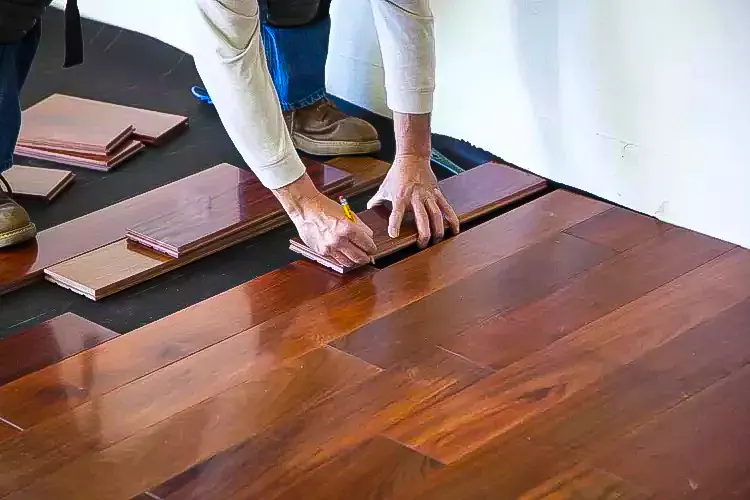
Our Timber Floor Polishing Process
We remove a thin layer of the timber surface using a powerful dust-free sanding machine that lifts dirt, scratches and dents. A professional buffer then smooths away any remaining unevenness or imperfections, leaving a clean, even finish before your choice of varnish is applied.
Assessment
On-site inspection of timber type and condition.
Dust-Free Sanding
Top layer sanded back to remove scratches and dents.
Buffing
Surface buffed smooth and even across the whole floor.
Staining
Optional colour matching before the finish coat.
Varnishing
Oil or water-based varnish sealed and protected.
Common Timber Floor Repairs We Handle
Damage doesn't always mean the whole floor needs replacing — most issues can be repaired board by board.
Scratches & Dents
From furniture, pets or daily foot traffic — sanded out and refinished to blend in.
Water Damage & Swelling
Boards affected by leaks or spills repaired or replaced individually where the subfloor is sound.
Gaps Between Boards
Seasonal gaps from humidity swings filled and colour-matched to the surrounding timber.
Hollow or Loose Boards
Boards that have lifted from the subfloor re-secured before any refinishing is done.
Cupping
Edges lifting above the board centre from moisture — corrected by sanding once the floor has re-acclimatised.
Discolouration & Fading
Sun-faded or uneven colour evened out with sanding and colour-matched staining.
Oil-Based vs Water-Based Varnish
Oil-Based Varnish
Durable, traditional finish with a warmer tone — but has a strong odour that takes around 2–3 days to fully clear.
Water-Based Varnish
Low odour, clears in about a day, and leaves a clearer film closer to the timber's natural colour — usually a small upgrade in price.
Which to Choose
If smell or turnaround time is a concern, water-based is the easier choice. Otherwise, both offer strong long-term protection.

Built to Last, With the Right Care
Timber flooring offers real versatility in design, with a wide range of wood species, stains, finishes and plank sizes available — homeowners have the freedom to choose a style that suits their taste and complements their interior décor, whether classic or contemporary.
Timber floors are also relatively easy to clean and maintain. Regular sweeping or vacuuming, followed by occasional polishing or refinishing, helps retain their beauty and prolongs their lifespan. And as a renewable resource, timber remains one of the more environmentally friendly flooring materials available.
What Our Clients Say
"Shaikat and team did an excellent job polishing a room floor and touching up minor repairs. Very professional and fast."
Keith Eadie"Good, high quality work. Pricing is fair, especially for a large 250 sq ft deck. Sanding was thorough and even, sawdust was regularly vacuumed up, and the work area was kept neat and tidy. Highly recommended!"
YREN BUTimber Floor Restoration Cost in Singapore
Pricing depends on whether your floor needs polishing, repair, or full restoration, plus the timber type (solid or engineered), area size, and finish chosen. Repairs to specific boards are typically quoted separately from a full sand-and-polish.
Because it depends on your floor's actual condition, we don't publish a one-size-fits-all rate — contact MCL Flooring for a free, no-obligation quote based on your specific space.
Timber Floor Restoration — Common Questions
What's the difference between timber floor polishing and timber floor repair?
Polishing restores the surface — sanding away scratches and dullness and applying fresh varnish. Repair fixes structural issues such as water-damaged boards, gaps, hollow or loose sections, which usually need to be resolved before polishing can take place.
Can engineered timber floors be sanded and refinished?
Yes, but with limits. Engineered timber has a real hardwood veneer, typically 2mm to 6mm thick, bonded over a plywood core. A thin veneer may only allow one light sanding, while a thicker veneer can usually take two or three. Once the veneer is sanded through, the plywood core is exposed and the board can't be refinished again.
How many times can solid timber flooring be sanded?
Solid timber is a single piece of wood through its full thickness, so it typically has enough wear layer above the tongue-and-groove for three to six full sandings over its lifetime, depending on board thickness.
Why does timber flooring develop gaps or cupping in Singapore?
Singapore's humidity swings between roughly 75-90% outdoors and 50-60% in air-conditioned rooms. Solid timber expands and contracts with that cycle, which can cause visible gaps between boards or cupping at the edges. Engineered timber's layered construction resists this movement better.
How often should timber floors be polished or refinished?
A light maintenance coat every 1 to 3 years keeps the finish protected, while a full sand-and-polish is typically needed every 10 to 15 years, depending on foot traffic and how well the floor has been maintained.
Should I choose oil-based or water-based varnish?
Oil-based varnish is a durable, traditional option but has a strong odour that takes 2-3 days to clear. Water-based varnish has a much lower odour, clears in about a day, and leaves a clearer finish closer to the timber's natural colour, though it typically costs slightly more.
Can water-damaged timber flooring be repaired?
Yes, in most cases. Water-damaged or swollen timber boards can usually be repaired or replaced individually rather than redoing the whole floor, provided the damage hasn't spread too far and the subfloor is sound.
Get a Free Timber Floor Restoration Quote
WhatsApp us a few photos of your timber floor, and we'll advise whether it needs polishing, repair, or both.